Saturday, June 13, 2020

Finished in April 2020

Weird World
by Zac Langridge


What a weird world we live in!

Months ago, it was as usual
Life went on without ceasing
And petty squabbles ruled all
It was about I, not we

But now we’re ground to a halt
And the engine’s been put to a standstill
And we’re looking out for each other
Except for a few… unfortunately

It’s a funny ol’ world we live in
The last decade seemed like chaos
But now with the addition of hindsight
It seems the far more desirable life, now

Yet it’s not all hopeless
Life still goes on
Just on a smaller scale
Confined

But that’s the thing
That’s not fun!
That’s not freedom!
But it’s not so bad

We’re still alive
We’re well
We’re with each other
And we have the power to stop it all

But we’re missing out on so much!
All the things I could’ve done
But chose not too at the time
Now I can’t do them at all

Until this is all over

But we’ve got each other’s backs
So even though people are dying
And bodies are filling excavated land in docks
The world is not feeling as though it’s at an end

It seems odd, that hope should be felt
More prominently in times of strife
Than in the cyclical normality of urban life
But that’s human nature... petty or what?

But that’s just the weird world we live in now
And when it’s over, we’ll forget it not


THE END

Wednesday, May 6, 2020

Finished in February 2019

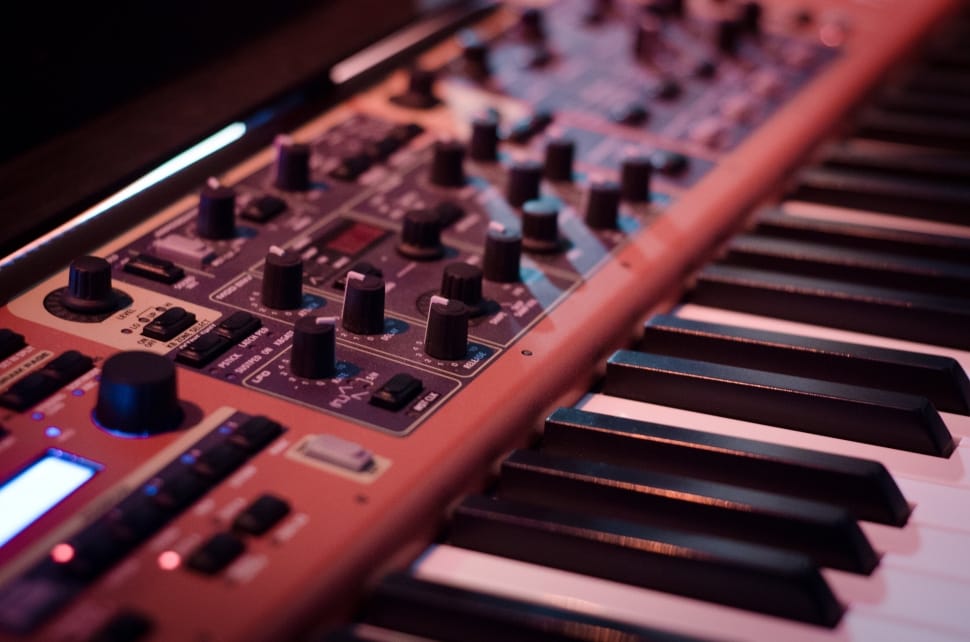
That Discussion About Electronic Music…….
By Zac Langridge


The classroom was usually never this busy at lunchtimes. The students of B21 were usually the more active bunch of kids, who preferred to kick a ball or run several laps of the field over reading a book or playing a computer game.
But today, for whatever reason, at least over half of the 30 teenagers had decided to stick inside on that day.

Luca Halpford was sitting at his desk on his own. He had his laptop out in front of him, screen glowing, with headphones framing either side of his head. His hand subconsciously moved the mouse which was, too, attached to the computer. No one disturbed him, at it wasn’t just the fact that he was closed off from the rest of the world at that moment. It was his intense concentration, his expression taught and tense, brow furrowed and lips pressed together. He appeared to be connected to the mouse, the headphones (whatever he was bobbing his head along to), and the laptop itself. He appeared to be lost in a world of his own.

So that was when Barry Wilford stepped up and made his way over to the table where Lucas sat. Pushing a chair away, he hauled himself up and perched on the edge of the wood. Had anyone glanced their way at that moment, it would seem a pretty bizarre and unexpected sight. Barry was in many ways, in another league to Lucas, good looking and extremely social. Bright, extremely friendly and intelligent, he had a certain movement - a “swagger” - in the way he walked that simply screamed confidence, and it seemed to work well on him. Friends with almost everyone in the school it seemed, he was undoubtedly destined to do great things in his future.
Lucas meanwhile, was admittedly not entirely a world away from Barry. Reasonably social, with a moderately sized group of friends, a few extra-curricular activities. Unlike his peer though, he was certainly not as extraordinary at everything, and didn’t have one of those faces that every staff member, or student, would recognize and identify instantaneously. He was just another face in a huge crowd - certainly not someone that Barry Wilford would bother wasting his time on.

Or so someone may have thought until that very moment, when Barry sat atop the desk were Lucas worked quietly on his laptop.

“What is uuuup, Lucas?” Barry greeted in his expectedly casual manner, leaning backward and keeping his head tilted up, entirely comfortable.
Lucas glanced upward, registering his peer, his face changing from an off-guard slack-faced expression, to an easy-going smile. “Oh, hi Barry. Not much up for me.” He took off his headset. “How’re you?”
“Oh fine, I guess. The others have just been checking out some trailers for the movies. Looks like there are some interesting ones out right now.” He paused. “Wanna come to one?”
“Yeah, sure. That would be great.” Lucas’ eyes flickered to his laptop and then back again. “I’d really like that. That’d be cool.”
“Cool.” Barry pondered for a moment. “If your friends want to come, they’re welcome to.”
“I’ll tell them,” Lucas nodded.

Barry nodded, and then leaned forward trying to get a glimpse of Lucas’ computer screen. It was difficult to see as it was turned away from him.
“What’re watching on there?”
Lucas shrugged. “Oh, I’m actually not watching anything.” He turned the screen to face Barry, who peered at it for several seconds. His face wrinkled in puzzlement.
“Whoa,” he exclaimed. He found himself both impressed and baffled by the complex interface that was on the screen. Dozens of options, as well as virtual dials and knobs, what looked like a timer or some sort of clock at the top. A play, rewind, fast-forward, and pause button. A record button. In the center of the interface, placed along a grid with numbers along it’s top, was a series of coloured bars with various different patterns of dots and miscellaneous markings arranged in each bar in a linear form. Barry starred in wonderment, the dozens of details and functions that the interface displayed overwhelmed him, swallowing his consciousness. His mind was unable to make sense of the neatly, efficiently organized mess in front of him.
“What the heck is this?”
Lucas chuckled almost knowingly at his bafflement. “This is a Digital Audio Interface. Capitals and all, sir.”
Barry shook his head. “What for?”
“Making electronic music,” he replied.
Barry’s face fell. His expression immediately became a mask of scorn and disgust. “Oh.” A pause. “Yuck.”


To his apparent surprise and outrage, Lucas just laughed in response. It wasn’t a huge guffaw; it was that same knowing laugh, quiet, but full of some sort of wisdom that Barry couldn’t put his finger on. It quickly faded to be replaced by a cold mask wearing a thin smile.
“Why do you say that?” Lucas asked, genuinely interested, with just a hint of defensiveness and opposition in his voice.
“Oh I dunno,” Barry replied in a voice layered with thick sarcasm. “Because you’re a hack musician.”
There came no reply.
“Why the hell would you want to make that music?”
“Why not?” Lucas shot back.
“Because you’re not doing anything.”

Lucas leaned back in his chair, eyes narrowed in a passive-aggressive manner. He gestured to the complex interface onscreen. “All this is me doing nothing to you?”
Barry nodded. “All you’re doing is pressing buttons. That doesn’t take any effort.”
“Doesn’t it?” The reply was sharper now.
Barry had expected Lucas to cave in by his harsh words, so his defensive, yet somewhat wise responses took him off guard. “No.” An awkward pause. He composed himself. “You may as well just be stealing from someone else’s song. All you’re doing is pushing some keys and letting your computer do all the work for you. I bet you can’t even sing!”
Lucas unplugged his headphones and turned the computer towards Barry. He tapped the mousepad and the song he was creating started playing. A texture of patterned tunes, beats and distorted samples started to play in a vast soundscape of synthesized electronic music. Barry shook his head in mock disgust. He himself played the piano and often performed in front of the school. He enjoyed it greatly. There was nothing else quite like it; letting your brain link with your muscles, fingers and the keys - letting pure music flow out for his peers to feast their ears on. Nothing also compared to the hours of practise and repetition and passion he had poured into it, simply to become as good as he was. And here was this kid, this wannabe “musician”, thinking he could replicate that by using software to do all the work for him. Making him famous without any of the work put in to deserve it. The song itself, wasn’t bad, but the idea that Lucas had used a laptop to churn it up made his stomach turn over.
Lucas was clearly proud of his creation. He paused the song and turned back to Barry. “I made that.”
“No you didn’t. The computer made it,” he spat accusingly.
“Nope. I made it. Using a computer,” Lucas announced, deflecting Barry’s comments off like bulletproof glass.
His peer snorted. “Like there’s any difference.” He stepped back, as if preparing to leave. “I had to practice years and years to get to wear I am. Playing the piano, or any instrument, takes skill and passion. It takes hard work and effort. You can’t just expect to become famous by churning out a bunch of noises on a piece of technology.”


Lucas chuckled. “Amazing. You claim to be of superior musical knowledge, or talent than me. And yet with those comments you just made, you just displayed how immensely ignorant you are when it comes to electronic music.”
Barry was taken aback at this response. Once again, he’d expected Lucas to display a sense of embarrassment, or shame, or guilt - his actual reactions however were the exact opposite. He opened his mouth to argue, but Lucas cut him off.
“What do you actually know about electronic music?” Lucas asked expectantly. “Do you know how it’s made? Do you know when it was invented?” What classifies as ‘real’ music?” A pause. “Well go on. Answer those three questions for me.”
Barry’s response was to look positively stumped.
Lucas looked satisfied, triumphant. Determined not to let him win, Barry sat down next to him.
“Electronic music,” he snapped, “is made by you clicking some buttons on a keyboard and autotuning your terrible singing to make it sound amazing. You then sell it to the dumb masses who eat it up without knowing that the ‘genius’ behind the song, is a fraud who doesn’t know the difference between E flat and D sharp.”
“Wrong!” Lucas exclaimed with relish. “You’ve just once again proved how misguided and oblivious you are to the principles of electronic music, and music in general, for that matter.” A pause. “And by the way, yes I do know the difference between E flat and D sharp: Nothing. Expect their names.”
Barry’s mind was racing in a puzzled state of panic. In his head, he’d had the higher moral ground from the start - knowing how to play the piano and having years of experience behind him to back his point up. In his mind, he should’ve won the argument already, by miles. And yet here he was, being outsmarted and beaten by someone who made music with a laptop, of all things.
Lucas continued. “Electronic music is made by people simply using technology. The technology doesn’t magically make it all by itself.” He gestured with his hands. “Take digital art, or digital painting for instance. That still requires skill and talent and passion. The computer doesn’t make it all by itself; the artist creates the final product. The artists simply use different tools. They paint using tablets and styluses, instead of paint and paper - but the skill and passion’s still there.”
“Tha - that's different though….”
“How?” Lucas face grew into a sly smile. “Electronic musicians simply use computers to help make music. It’s not a matter of just pressing a button. You think pressing a button structures a song? You think pressing a button comes up with melodies, harmonies? You think pressing a button creates a beat? You think a song is created magically just like that, without any human effort or imput? Or passion?”
Barry was stammering now. “Bu - but I could make a song on a laptop any day.”
“Then why haven’t you tried it?” Lucas was confident, smiling with ease. “For that matter, why aren’t kids all around the world trying it? If computer music is so easy to make, why isn’t everyone making it and becoming millionaires?”
Barry didn’t respond. He had no answer, and he was scolding himself for making his previous comment, as it had only opened him up to ridicule. Lucas was besting him calmly, cooly, and with little effort.
Lucas continued now with mechanical precision, ripping into Barry’s flawed arguments without mercy. “It took me over a year to fully get the hang of music production software, and it could’ve taken longer. And even then, my songs were amateurish and sounded terrible! I’ve been doing this for some time now, and I’m still learning and practising.” He turned the laptop towards Barry once again. “Go on, make a song.”
Barry shook his head. “What?”
“Make a song that will become a worldwide hit.”
Barry shook his head, examining the immense grid of tools, virtual instruments, samplers and drum machines on-screen. “I….. I don’t know how.” He was suddenly feeling very foolish.
“Exactly.” Lucas patted him on the back. “And even if you knew how to use the software, would you really be able to compose a smash song that breaks the charts in two? Would you even be able to create a song that will sell at all?”
Barry, realising that it was becoming pointless to argue now, tried one last ditch effort. “But you’re using technology to create music.”
Lucas’ response was so simple it was almost lazy. “A piano is a piece of technology. So is a violin, a flute, a guitar. And just like a computer where you press buttons, with a piano you press keys. With a guitar you pluck strings.”
Barry was silent now. He could feel his face burning red, both from embarrassment at Lucas’ effortless dispatching of his arguments, and high-and-mighty attitude he’d displayed towards Lucas’ song - but also from his anger at never considering Lucas’ perspective. He was right; all instruments, even the oldest ones are pieces of technology to some degree. And Barry had never considered exactly how electronic producers made their music; to some degree, he’d genuinely thought it was the touch of a few buttons that made a song.
Lucas gestured to his computer and clicked on the interface. Moving the mouse across a grid on the screen, he started clicking and holding down a button on his mouse, dragging the cursor along the lines of the grid horizontally. Green bars started to appear each time Lucas clicked and released, and he started to sketch out a pattern on the grid of various blocks. Just like digital art, Barry thought. After a while of drawing out the strange pattern, Lucas turned back.
“I just created a melody.” When Barry didn’t respond, Lucas added, “That’s how I write my music. Don’t tell me that that doesn’t require talent or passion. Why the hell would I spend hours of my life, devoting time to making music if I didn’t have any passion for it?”
Barry shrugged. “I dunno. Maybe you just wanna be famous, or rich.”
Lucas snorted. “I’d hate to be famous. It would be hell being a celebrity. And I’m certainly not making music for the money. I mean, are you playing the keyboard for money?”
“No.”
“That’s what I thought.”
A beat passed. “I still don’t think that autotuning your voice is good.”
“Neither do I, unless you can actually sing of course. Many artists that process their vocals aren’t hacks who can’t sing; many of them just think it’s a cool effect. On top of that, using autotune doesn’t automatically make it electronic music. Singers in jazz bands can use autotune. So can pop singers, and so can rock musicians, etcetera, etcetera.” Lucas pondered for a moment, then continued. “For that matter, autotune can sometimes make singing sound even worse. It doesn’t magically make everything sound great.”
Barry nodded, but still didn’t look entirely convinced. “Electronic music is still just noises from a computer though.”
“Piano music is just noises coming from a big wooden box. Flute music is just the noise of air being blown through a tube.”

There was a long silence. Then Lucas started again. “Electronic music is nothing new, Barry. It started off actually in the late 19th and early 20th centuries, believe it or not. In the late ‘40s, musicians started to develop what they called musique concrète, experimental music made by edited fragments of recordings. Effectively it was like sculpting soundscapes out of natural and artificial noises. Pretty cool, eh?” Barry nodded. “However true electronic music - music made from electronic instruments - took off in the 1950s, in Germany. It began to spread.”
Lucas opened up Google on his laptop and starting typing. “It was all very experimental stuff. People didn’t like it very much at the time, but it was pioneering. Very avant-garde.” He clicked on a video. “Here’s some Soviet-era electronic music from Russia. From 1969 too! Imagine that! Have a listen to it.”
Barry took the headphones and placed them over his ears. The video began to play. Instantly, Barry felt removed from Lucas, from the class, the school and its inhabitants. Sucked - no, teleported out of his life, and into a world far different than he had ever seen or experienced. It wasn’t just the mid 20th century, the ‘60s. No it was far more removed, like the atmosphere set by old science fiction serials long ago. A time when America landed on the moon, when the world looked towards the stars in wonder and imagined aliens, spaceships, futuristic races far more advanced than themselves. A time period when nuclear missiles were trained on two superpowers, ready to find their targets if commanded to. The music, barely hindered by the faint crackles and snaps of the old analogue tape, appeared to bubble out of the headphones into his ears. An eerie series of sounds, all layered carefully on top of one another - some swooshes, some haunting whistles, some echoing wailing. It was otherworldly, like the sonic communication of an alien species. So old fashioned, yet futuristic at the same time - old fashioned futurism, he thought with a chuckle.


He took off the headphones, and the feeling of nostalgic loneliness dissipated, like a spaceship that had been switched onto hyperdrive. “That -” He struggled to find words to fit his feelings. “That’s pretty cool.”
Lucas grinned. “Slowly, as electronic music became ingrained into films and TV shows like Doctor Who, it began to become more popular. Eventually, around the ‘70s, it hit the music charts, and then the ‘80s went to the moon and back with synthesized, artificial music.” He thought for a moment. “Ever heard of Kraftwerk?”
“Heard of the name; may know some of their music. Never paid attention to them though…. Too old school for me.”
“Well they were from Germany. They were the band that first brought electronic music to the charts. They were the pioneers of mainstream electronic music.” Lucas began typing again and clicked on a video. “You may have heard of this song.”
Barry had. His parents, fond of older music, had played it every now and then. Kraftwerk’s “The Model” was a pure electronic song and it didn’t try to hide it. The synth lines sounded so crisp and artificial, the drums so perfectly timed. Barry knew that he was listening to a song from a time when electronic music was new, fresh, and wasn’t snubbed by people as much as it was now.
“She’s a model and she’s looking good.”
The synth echoed the tune with sharp precision. Barry was familiar with the song, but had never thought about it as electronic music. To him, electronic music had all been about nasty bass drops and horrendous painful noises that trembled the floors of nightclubs. Here however, was a song of his parents’ time that, at first, he’d never would’ve guessed was of the same genre.
“.....It only takes a camera to change her mind.”
He could hear the lead singer’s German accent creeping through. The pulsing bass arpeggiator was catchy, and he started to bob his head along to the music.
“Here’s another good song of theirs.” Lucas clicked on another video.
Barry listened with curiosity and amazement. This new song, “The Robots”, started off similar to the Soviet-era song: abstract synths like the noises from a spaceship. The song began to pick up the pace with a pounding bass arpeggiator, a steady mechanical beat and a charmingly simplistic synth tune. Once again Barry bobbed his head to the music.
Singing started, filtered electronically to sound like robots from an old serial.
“We’re charging our battery.
And now we’re full of energy.
We are the robots.”

Once again Barry caught the German accent creeping through. He gazed at the video itself which showed what looked like an album cover - presumably the album from which the song originated from. It displayed four men standing against a vibrant red background, presumably the four members of Kraftwerk. They were all dressed in red shirts with black ties, a striking image that almost made Barry think of communism. The members were facing slightly towards the right, each with short hair dyed jet black, stark pale skin and mouths red with lipstick. The man at the front stood tall, his face impassive and blank. The second man looked stern, his face almost grim and disapproving. The other two men further back appeared to to be smiling ever so slightly, relief amongst the stark and almost imperialistic imagery.
“Karl Bartos, Ralf Hutter, Florian Schneider and Wolfgang Flur,” muttered Lucas. “The four original members of Kraftwerk.” He closed the webpage.


Barry thought for a moment. “Not gonna lie Lucas. I’d never thought of electronic music like that. In, I mean, the way you’ve presented it to me.”
“No,” Lucas agreed. “Not a lot of people do, I feel.”
Looking slightly guilty, Barry said, “I’m sorry I labeled you a hack. I guess I just never really understood your genre of music, or how you make it.” He stifled a laugh of self-scorn. “Hell, I don’t even think I wanted to!”
Lucas shrugged. “That’s alright. At least you know now.”
Barry continued. “I should tell the others at music classes about this. I’m sure they’d be interested - unless of course they already know what you know.” Suddenly his eyes lit up. “Are you doing the speech competition this year?”
Lucas shook his head. “Hell no. I suck at writing.”
Barry leaned forward eagerly. “I really like writing. Are you good at public speaking?”
“I’m alright, I guess.”
“Write a speech about this! It’ll be great. I’ll help you with the writing - we put all the points you made to me down, and we’ll be able to hopefully convince others that electronic music is a real type of music. In front of the whole school too!”
“Are you sure?”
“Oh yeah! Come on man, you’ve gotta do that. I can help you with it.”
“Well, if you’re su -”

The bell rang. Students began to pack up their bags and lunches. Barry got up.
“Meet me after school by the back entrance. We’ve got a speech to write.”
He scurried off. Lucas sat where he was for a moment before shutting down his computer. Smiling inwardly, he packed his bag and started off to his next class.

THE END

Thursday, April 16, 2020

Finished in August 2018


Depression Is My Fuel
By Zac Langridge


I like being depressed
Why is that?
Truthfully, I’m not too sure
But I am depressed
And I don’t like it

But I do simultaneously

Because the truth is
I am like a minefield
Any stray steps - any wrong words or messages
Will set me off

And I go to drown
In the painful, gloomy, dark pit of despair
Where I think, and ponder
And brood and let my thoughts stew

Stew into hatred
Overboil into thoughts of rage
Of anger and selfishness
Of death and torture and revenge

I know that it’s not healthy
I know that it’s dangerous
I know that’ll I’m just letting it all build up
Until the explosions start to begin

Which I also know
Will affect myself and all those I know
But why do I want that?
Why do I want to hurt others?

I fantasize about killing people
I fantasize about going rogue
About exploding out at everyone
And attacking, torturing, killing

I imagine my family and friends
All in shock and disbelief
As I unleash the monster that resides inside me
Growing hungrier every day

As it slowly consumes everything
As it feasts on my depression
And grows stronger, deadlier
And brings me ever closer to my apocalypse

Why do I want this?
Why do I want myself to suffer?
Why do I want to inflict suffering on others?
And drown in the black waters of self pity and hatred?

I am a sociopath
A textbook example
And no-one knows
Expect me

I want - need - help
I can get help
But I don’t
I don’t want do

I want to shock, and intimidate
To hurt and inflict damage
To beat and bite
To cut and slice

Depression is my fuel
It’s my source of refuge
My source of dreams and visions
Of my inevitable future self


THE END

Monday, March 30, 2020

Finished May 2019


The Sad Story of The Divergent Series
How an initially promising franchise of films imploded from the inside out
By Zac Langridge


Chapter Six: Reflection/Who’s to Blame?

As of writing this chapter, it’s been over five years since the release of the original Divergent and over three years since Allegiant’s failure. Now it’s time to reflect. The previous five chapters have pretty much summarized just what happened to the series; how an initially intriguing franchise crashed and burned due to many circumstances that ultimately set its penultimate installment to fail from the get-go.
And now it’s time for the more unpleasant side of things. It’s time to start pointing fingers.
The YA fatigue was pretty much uncontrollable, and no-one could’ve realistically prevented it from happening. But all the same, there were many fatal mistakes made from many people involved that ultimately helped doom the series. If said-mistakes had been avoided, then the eventual mess that the Divergent franchise found itself in could’ve also been avoided. Essentially, we need to nail down who’s to blame for the failure of The Divergent Series, and what future filmmakers/studios can learn from their missteps.

The invisible force in suits...

Truthfully there are multiple culprits, the first of which being the studio that distributed the films: Lionsgate.
The fashion in which Lionsgate and its underlier Summit Entertainment handled the series, frankly smacks of both arrogance and cockiness. It’s perfectly understandable to adapt a series of books to capitalize on a trend. Massive franchises are after all the bread-and-butter of Hollywood currently, and Lionsgate didn’t want to be left behind with no other tentpole films to attract big bucks that they’d experienced previously. However they handled it with such carelessness. It’s quite amazing to me that their film chiefs Rob Friedman and Patrick Wachsberger made the decision to split Allegiant into two parts directly after the release of the first film, without waiting to see if the second film grossed any better (as it was projected to). And even when it’s opening weekend was lower than expected they still decided to press on. There was no reason to split the final installment up other than money, and the fact that Lionsgate was (at the time) the only other studio besides Warner Bros. that had attempted the two-part maneuver before, made it really come off to onlookers as a greedy move on their part.
And then there’s the fact that the studio insisted on a one-movie-a-year schedule, effectively putting the franchise’s production team on a consistent scramble to get the movies finished in time. Once Divergent was out the door, there was no breathing room; a follow-up needed to be made within a year. After that, another, and then another again. An insider reported that “to make their date, they were just racing forward (....) The whole company is much more interested in delivering product than maintaining quality control (....) the whole thing is just, ‘Move it forward, move it forward, move it forward.’” It’s understandable that the studio would want to get a film out early, so that audience hype doesn’t dwindle, but surely it’s not such a bad idea to give the filmmakers at least 6 months of extra production. Otherwise, far less people will pay for tickets if the film turns out to be a rushed, poorly-received, corporate product.
And after the third film flopped, they decided to keep the TV movie plans hidden from the cast members. As a result, none of them knew what was going on, and the main star of the franchise found out about it when she was getting off a freaking plane! The lack of effort and respect that Lionsgate had for their series is astonishing to me, and it ended up utterly embarrassing them by exposing the studio as an assembly-line production that stifled creativity for the sake of making money, and forcing them to cancel the fourth movie in a series that only had one installment left to go. And with recent films of theirs like Power Rangers (2017) and Robin Hood (2018) also bombing and failing to start franchises, plus the tiny fact that the company's stock has fallen a whopping 44% in the last year alone, it only goes to prove how out of touch Lionsgate is when it comes to the shifting tides of mainstream Hollywood.

The exhausted artist...

The next culprit that could be blamed are the actual filmmakers themselves.
It’s very easy for people - fans especially - to place the blame on Insurgent and Allegiant director Robert Schwentke, as it was his flawed newer approach to the sequels that threw many people off. Regardless of what some may feel about the first film, director Neil Burger clearly put his soul into it, going so far as to shut down major streets in Chicago to film the movie, not to mention re-adding iconic scenes from the book that had initially been removed. Burger displayed a sense of pride in his film, as well as a level of passion/understanding for the fanbase - something which cannot be said for Schwentke. Unlike his predecessor, Schwentke rarely takes interviews and doesn’t talk much about the Divergent films, only occasionally appearing publicly to promote his work. It’s been a genuine struggle to actually find interviews of him where he talks about the series, and only recently has far more material surfaced. With all due respect to Schwentke, he has admitted that he doesn’t like being in the public eye (which I can absolutely understand), but that doesn’t change the fact that it just feels as though he signed onto the series to experiment and add a new genre to his catalogue, in contrast to Burger whom I feel actually was passionate about the books.
Even so, I don’t feel as though he’s entirely responsible for the series’ shortcomings, and it’s rather unfair to lay it all on him. Most of Insurgent’s flaws originated from its script, not its direction. Schwentke himself was not responsible for the stilted dialogue, plot-holes and degrading portrayal of secondary characters in that film - however he was responsible for some admittedly beautiful visuals, well executed action scenes, as well as Shailene Woodley’s best performance in the series by far. As for Allegiant, he was clearly burnt out and weighed down by Lionsgate’s impossible schedule, and apparently no longer had the energy in him to get out a decent film. And for all Allegiant’s flaws, he was still responsible for its stunning design and visuals. He also made the excellent decision to hire Joseph Trapanese as the new composer for the series, which resulted in phenomenal musical scores for both sequels.
Even so, it was his abundant focus on fancy visuals and action over the original themes and characters (integral to the books and first film), as well as his disregard for Burger’s original vision which angered and off-put the fanbase. It seemed as though he was far more passionate about creating a futuristic world than faithfully adapting from the novels, which translated into what the screenwriters wrote, regarding their deviations from the novels in terms of story and character.

However….

Someone higher up allowed and apparently encouraged Schwentke to make the changes that he did. And that all can be placed on the producers for The Divergent Series: Douglas Wick and Lucy Fisher.

The tragic culprits...

I would like to be clear here when I say I truly believe that Wick and Fisher had good intentions from the very beginning. As I’ve described previously, these two were clearly incredibly passionate about Veronica Roth’s books, and had enormous respect for the source material and the author’s vision. They’d made it clear that they were making the films for the fans, whom they clearly had an understanding with (like Neil Burger did). And they’d both mentioned numerous times in interviews that if the fans remained happy and satisfied, then the series should be a success, as the fans are the core audience that will actively pay to see the movies over critics and general audiences. By all means, I truly feel that Wick and Fisher were (and still are) very caring and wonderful people who wanted to make the series the best they could.
Unfortunately, despite their efforts, this didn’t happen. The series declined in quality rapidly, and I feel as though they both are largely to blame. The two producers both seemed to really like Schwentke’s special effects-heavy vision for the sequels, and they cite it as one of the main reasons they hired him in the first place. Instead of requesting him to stick to the template previously established in the first film, they granted him free creative control to expand and re-imagine Burger’s original vision. They too, working with author Veronica Roth, also had the opportunity to course-correct after Insurgent proved divisive with fans and critics. Instead of doing so, they doubled down, which only further alienated the fans.
I also can’t fathom why Wick and Fisher would allow the screenwriters to divert from the original plot of the books so severely. They clearly have a lot of respect for the source material, so I cannot wrap my head around how they were okay with so many essential character elements being basically disregarded in the sequels. A great example of this would be how Four’s fear of heights completely disappears in the Allegiant film, despite him being shown in locations very high off the ground, and despite how this fear is still so very prominent in the original book. Why would the two producers let the filmmakers actively do this? Did they not understand that this apparent disregard for the source material would anger the handcore fans? It certainly seems as though they got carried away as they got further into the series, and lost sight of what really mattered. As if they assumed that since the first film had been a success, they didn’t need to put the same level of attention-to-detail in the others. I can’t be sure, but if this is the case, they were mistaken.
And the truly gut-wrenching thing, is that Wick and Fisher’s unintentional betrayal of the fanbase was what contributed to the ultimate failure of the series. It’s such a difficult thing to stomach because the producers clearly didn’t mean for this to happen, and they obviously put their blood, sweat and tears into the films. One can almost imagine their devastation when they finally found out that there would be no big finale, that the ending would have to be cancelled entirely. I have nothing but sympathy for them, and just imagining how they would’ve reacted when they found out about Ascendant’s cancellation is quite heartbreaking on its own.

Please note that I’m not trying to personally attack or belittle any of these people I’ve just mentioned. I do, however, feel the need to point out the mistakes they made in the making of the series, so we can understand some of the core elements as to where the Divergent films went wrong.

Overall here are the main mistakes The Divergent Series made:

  • Splitting the final film into two parts; it was done purely for financial gain, and onlookers knew it.
  • Diverting from the source material too much; never a good plan, as it alienates the fanbase and turns supporters against the brand.
  • Abandoning the original vision for the sake of visual panache; it felt disrespectful towards the first film and completely turned attention away from the series’ soul.
  • Really poor timing; the YA craze had faded by the time the third film came around, and no-one cared anymore.
  • YA oversaturation; contributed to the point above.
  • Rushing the films to hit release dates; quality is more important than quantity….unless your Lionsgate, of course.
James and Woodley in a still from the original Divergent
As of May 2019, it’s safe to say that The Divergent Series is officially dead, and so is the YA post-apocalyptic genre, with much of our current entertainment saturated by superhero franchises in the likes of Marvel and DC.
The final YA franchise to close its doors was Fox’s The Maze Runner, which finished in early 2018 with the release of The Death Cure. Unlike The Divergent Series, the filmmakers made a smart decision and decided not to split the final film into two parts. The final film was also delayed for about two years, due to its star Dylan O’Brien having to recover from a horrific onset accident during shooting. As awful as it sounds, this delay from the 2016 release to a 2018 release was actually somewhat of a good thing, as it ended up saving the movie in my opinion. Because in 2016, a year where audiences were fed up with those sorts of films, I feel The Death Cure might have easily been a flop too. Fortunately, the two year hiatus allowed fatigued audiences a break, and the final Maze Runner film was a box-office success, albeit to mixed critical reviews.

Ever since then, the YA post-apocalyptic genre hasn’t resurfaced and the obsession Hollywood had with those sorts of films, plus the act of splitting a finale into two parts, are practically extinct.
Thank goodness they learned from Divergent!

THE END

Wednesday, March 25, 2020

Finished May 2019


The Sad Story of The Divergent Series
How an initially promising franchise of films imploded from the inside out
By Zac Langridge


Chapter Five: How to Kill a Franchise

The Divergent Series: Allegiant (again, to use its full title) was released on March the 18th, 2016 in the US and numerous other countries worldwide. For some reason, the release date was delayed in my home-country of New Zealand, as well as Australia, where it was released a month later. It was released head-to-head with Disney’s Zootopia, and mere weeks before the gargantuan premier of DC’s Batman V Superman: Dawn of Justice. Clearly Lionsgate was still confident in their brand. They desperately needed the movie to be a hit, as the first months of 2016 were pretty desperate and embarrassing for the company. Almost all of their major tentpole films had bombed hard, losing huge amounts of money, and many of them had been received disastrously by audiences and critics. These films included Gods of Egypt, Norm of the North, Dirty Grandpa, The Choice and The Perfect Match.

If the reviews for Divergent had been mixed and the reviews for Insurgent had been negative, then the reviews for Allegiant were most certainly along the lines of scathing. The film was near-universally panned by critics, with the film currently sitting at a dismal Rotten Tomatoes score of 11%. While there were a few mildly positive notices, even fans of the series appeared to resign to the fact that a Divergent movie was now officially considered terrible. The unnecessary splitting of the final installment into two films was condemned, and seen as a sure sign of the cynicism that has consistently plagued Hollywood throughout its history. The film’s uninspired and lackluster direction was also slammed by reviewers, as the exhaustion/desperation of the director/screenwriters respectfully became ever so apparent onscreen. Even the cast's performances - which were initially considered to be the highlight of the series at a point - were now subject to merciless mauling by unimpressed audiences that had, by all accounts, finally decided to call it quits on the endless stream of mediocre YA adaptations. The audiences had simply had enough, as had the critics, and even hardcore fans were beginning to check out too.
And with this final round of poor reviews to add to the already long list of bad decisions and circumstances that resulted in Allegiant being put in the difficult position that it was, it all culminated in the film’s box-office. The film opened to a gross of $29.1 million in the US, almost 44% down from the $52.2 million opening that Insurgent experienced. The film’s total opening gross was $89 million, only making $54 million overseas. It was overrun by Zootopia, falling into second place on the box-office lists, and after it was all over it eventually managed to release a worldwide total of $179 million. With the film’s reported budget being $110 million, Allegiant had - to the surprise of some and no-one at the same time - become a box-office flop. To make matters even worse, it’s failure resulted in Lionsgate’s stock plummeting at least 3% after it’s release, something the struggling studio certainly didn’t need at the time. It wouldn’t have been so bad if all of Lionsgate’s previous attempts at creating franchises over the previous year hadn’t been disasters too. Yet here was the studio, hungry for franchises, but starved of results entirely. In essence, Allegiant was a disaster that dealt Lionsgate a serious blow.

Stars Woodley and James promote Allegiant at an event

Things moved slowly and painfully for The Divergent Series after that.
Less than a month after the film’s release, The Hollywood Reporter announced that the budget of the final movie, Ascendant had been slashed. This was clearly down to Lionsgate hesitating whether it was worth committing a huge budget to a film that may already be an even bigger dud than what they’d experienced already. Interestingly, the film’s original release date of March 2017 was pushed back to June, reportedly to accommodate Lionsgate’s Power Rangers reboot (or perhaps to give newcomer Lee Toland Krieger more time to prep the film).
And then the big news arrived in July: Ascendant wouldn’t be made into a theatrical film at all! It would instead be released as a television movie which would result as a springboard for a reported Divergent TV series that would act as a spinoff. According to Variety, “Lionsgate’s television group will handle production (....) The idea is to finalize the storylines involving the current cast and to introduce a new cast, who would then continue the series on either a traditional or streaming network.” It was huge news that outraged the core fanbase and surprised many onlookers - including the main cast themselves! Shailene Woodley herself was reportedly getting off a plane when she was told what was going on. Miles Teller also responded that the news “caught us all by surprise.” When other cast members such as Ansel Elgort, Octavia Spencer, Theo James and Jonny Weston came out stating that they also didn’t know what was going on, it became very clear that Lionsgate had little intentions of dedicating huge effort towards the new direction the franchise was apparently heading in. “At this point, it's a different set of circumstances (….) We'll see. I honestly haven't talked to anybody,” elaborated Teller at the time.

Slowly, as the months went by, the cast members began to announce that they wouldn’t be returning. Fans of the franchise (that had still stuck around) were losing hope fast. An optimistic report in August announced that the storyline of Ascendant would play out across ten to thirteen episodes, but it was immediately followed by Woodley claiming a month later that “Out of respect to the studio and everyone involved (….) I’m not necessarily interested in doing a television show.”
As time ticked by, the final installment of the franchise appeared to pass out of people’s minds. Finally - a year later - it was announced that the Lionsgate-owned TV network, Starz, would be bringing the finale to life. And then another year promptly passed with absolutely no news surrounding the film at all.
Finally, in December of 2018 - over two years after the film’s original planned release date - news broke that Starz had no further plans to release Ascendant as a TV movie, or a series.

And that was that! The Divergent franchise had officially had its plug silently, and unceremoniously pulled.

To be concluded...

Wednesday, March 18, 2020

Finished May 2019


The Sad Story of The Divergent Series
How an initially promising franchise of films imploded from the inside out
By Zac Langridge


Chapter 4: Buildup to Failure

From May 2015 to March 2016, numerous key factors would build up like an army of archers, bows drawn and pointing towards Allegiant’s release. These factors are long and complicated, but they’re key to understanding just what caused the spectacular collapse of Divergent.

Interestingly, one of the major factors took place, not in the year that followed Insurgent’s release, but around the time Divergent was still filming. Veronica Roth released Allegiant, the final novel in her trilogy in October of 2013. It was positively received by book critics, but the response from the fans was another story.
After the book was released, angry tweets and messages began appearing online directed towards Veronica Roth as detailed in a famous article. Fans of the trilogy who were eagerly awaiting to see how the story would end, were outraged and upset at many of the revelations and twists that took place in the book. Among several of those, was the idea that the Allegiant novel renders the events of the previous two books largely meaningless. The book's slower pace and largely different tone also threw readers off guard, in a very similar fashion to the reaction to Suzanne Collins’ Mockingjay. And above all, most upset reactions were initiated by a very, very divisive shock ending which I won’t spoil.
The result of Allegiant’s reaction was that it left a bad taste in the mouths of many diehard fans, to the point where some expressed a sense of betrayal by the author. A group of them even expressed desire to boycott the movies, especially Allegiant. Many didn’t want to relive the strong sense of emotion they felt after reading the book, while others wanted to demonstrate their anger towards Roth by refusing to pay and see the film. Whether the boycott was a real thing or not is unclear, but one can’t help but wonder if the poor fan reaction to the novel helped slam the lid shut on the series’ coffin.

Found this online - thought it was funny (I actually liked the
Allegiant book, though).

In September of 2015, the second Maze Runner film, The Scorch Trials, dropped in cinemas. And it was around this time that the fatigue that had been swirling around YA adaptations for some time, began to settle in. The second film in Fox’s franchise grossed less than the first installment, with a worldwide total of $81 million in comparison to the $102 million that the first film grossed. And although fans were generally satisfied, critics who initially praised the first film, gave its follow-up far more mixed reviews as well. It certainly seemed as though YA movies were everywhere in the mid-2010s - some good, some bad. Some mediocre. But there was most certainly an oversaturation that was being felt sorely by audiences. Declining grosses were becoming apparent with most franchises, and it wouldn’t only affect Divergent and The Maze Runner.
As 2015 drew to a close, Mockingjay - Part 2 was released, drawing The Hunger Games films to a breathtaking success of a closure. Except….it wasn’t a breathtaking success. The final film underperformed at the box office, making a mildly disappointing $101 million in comparison to the $121 million of the previous film’s grosses. The downward trajectory of grosses was now even more apparent than ever, and while Mockingjay - Part 2 received more favourable reviews than Part 1, it certainly seemed as though the underwhelming reaction to the previous movie caused by the two-part splitting of the story, had hurt its follow-up. It appeared as though the final release of The Hunger Games series and the closure of the year 2015 signified the death of the YA film genre. With an oversaturation of franchises that many were deeming too similar to Hunger Games, or too mediocre in comparison, it certainly appeared as though the initially fresh appeal of sci-fi YA adaptations had worn off. And if the final film of The Hunger Games - a franchise that many considered to be the gold standard of such a genre - could be affected by the fatigue, then there was surely no hope for the other contenders.
This was pretty much confirmed by the 2016 release of Columbia Pictures’ The Fifth Wave. The film was expected to be the kickstarter for a new franchise based off of Rick Yancey’s trilogy of novels, however it was largely panned by critics and tanked at the box-office. Any hopes of a sequel were obliterated. If The Fifth Wave had come out earlier when audiences were hungrier for young-adult sci-fi films, would the film have been a success regardless of its critical mauling? It’s hard to tell, however it certainly seemed as though the fan-base had less of an impact than it did for the other three franchises. Regardless, the failure of the movie certainly would spell the end of the dystopian YA genre in movies, and would be a bad omen for the fast-approaching release of Allegiant.

These franchises were only three of many YA franchises in
the mid 2010s! Fatigue was inevitable.

A mere two months after the release of the second film, production moved back to Atlanta to start filming for Allegiant, with Robert Schwentke once again at the helm. Pre-production had been completed simultaneously during post-production for Insurgent, and the film’s script had been written by a team-effort of four different (credited) screenwriters. Among them was Maze Runner penner Noah Oppenheimer. Once again, some new names were brought on as cast. Jeff Daniels would be the biggest name to join. Swedish actor Bill Skarsgard, who would go on to play Pennywise in It (2017) also joined, along with Nadia Hilker and Andy Bean. Other than that, much of the same cast and crew would return for the penultimate film. Filming for Allegiant reportedly started in May and concluded in August. It was the shortest production date for any Divergent movie so far, taking into account the fact that both prior installments reportedly had gone through reshoots, while Allegiant apparently had gone through none.

Unlike the previous films which had been heavily publicized, the production of the third film was oddly secretive in comparison. Very little was revealed about it. The fact that it was the penultimate film in a franchise that the studio was expecting to be hyped up may have been a contributing factor to that.
However many may start to wonder if the apparent and rumoured production issues were a cause of this strange behind-the-scenes silence.
Please note that the next paragraph contains heavy speculation. I have no confirmation that any of these theories are true!

Woodley and Kravitz on the set of 2016's Allegiant

Many knew full-well that there was no need to divide Allegiant’s adaptation into two parts, and that it was done solely to force more money out of audiences. When watching the final movie, it appears that no-one was realising and experiencing this more than the screenwriters themselves. Oppenheimer and the three other screenwriters were having to somehow squeeze a full movie, out of half a book that barely had enough story to do so. Not only this, but they were having to deal with the consequences of the changes made to Insurgent that would carry over into their movie. Their only option was to deviate from Veronica Roth’s novel even further to cope with said-changes, and expand the story to fit two movies. In essence, they would be completely rewriting the story and all of its arcs to fit their requirements.
It’s unknown just how long the group of writers spent on developing their script for Allegiant, but one gets the impression that it was an incredibly short period of time. One also gets the impression that the writers had little idea where the story was headed for the fourth film, Allegiant - Part 2 (soon to be renamed Ascendant), due to their near complete rewriting of Roth’s story. Douglas Wick cited that Allegiant, if you've read the book, has (….) two climaxes. One is a climax in Chicago, which is basically for the lives of everyone in the city, and the other one is Tris facing off with David in the Bureau. It just felt like we had plenty of story to do this one, then a lot more story to tell for the final collision.” Suddenly it seemed as though the two-part finale wasn’t adapted from the original novel, but loosely inspired by it.
One must surely feel sympathy towards the four writers of Allegiant. They had effectively been forced by both the producers’ and studio’s decisions to divert from the core of the series, and delve into near-original material that hadn’t been written yet. If anything, the bare minimum of the book’s plot-line would be present in Allegiant, and entirely new storylines would have to be invented. It’s unknown as to what the Ascendant film would’ve been like, but it’s easy to imagine that over 50 percent of the movie would’ve been completely original material invented by the filmmakers. Said Douglas Wick of the changes: The movies we didn't want to make were those annoying ones in which they just stop in the middle of the story. So we very much wanted the movie to work as a separate piece." Essentially in what appears to be mere months, four different writers had to scramble to figure out how Allegiant would work with their guide being a book that wasn’t appropriate for the two-part finale format. On top of that, they would need to write competent material. You be the judge of whether the Allegiant script was any good or not.

The cast of Allegiant prepare for a crucial action scene

The next hurdle that the third film would face has pretty much been confirmed by The Hollywood Reporter, so the next points I will make hold more validity.
Robert Schwentke, director of Insurgent, had also signed on to direct the third and fourth films in the series. As mentioned before, it was a similar strategy that Lionsgate used for Hunger Games; director Francis Lawrence signed on to direct the second film, and then agreed to film the two-part installments afterwards. With the Mockingjay films, Lawrence and his crew would produce and film both movies at the same time, effectively in one supersized production. It would’ve been like shooting one six-hour long movie, except it would be released in two parts - a beginning and an end. This would be used to save money, as they would be able to use the same sets, costumes, locations and production companies for both films, instead of letting them go after the first film finished and then rebuilding/rehiring them when the second film got underway.
For some reason though, the studio and producers decided to do Divergent differently. They made the decision to film the two-part finale, Allegiant and Ascendant as two movies, with two completely separate productions. Instead of shooting simultaneously, they would shoot them one after the other. It wasn’t a very cost effective decision, and to make matters worse, Schwentke appeared to be suffering from the same post-filming exhaustion that Neil Burger experienced during Divergent. As stated before, in such a franchise production on a sequel often starts exactly when a preceding film is in post-production, putting extreme pressure on the already drained filmmakers involved. Neil Burger opted out of directing Insurgent for this exact reason, and now Schwentke who was locked into directing Allegiant immediately after Insurgent, was apparently feeling its effects quite severely.
One can’t really blame Allegiant’s faults all on its director. As mentioned before, the screenplay was subpar and Lionsgate had put its crew under an extremely tight schedule with little wiggle-room. However the exhaustion that Robert Schwentke was carrying into Allegiant directly from the aftermath of Insurgent seemed to bleed into his direction of the penultimate film. A production source claimed that “....between visual effects — which were on an impossible schedule — and music, he was working seven days a week, then had to start work on the next one….He put on weight. He was really wiped....” When one watches the third film after reading such reports, the final product is quite revealing. Many moments in Allegiant appear to have had little-to-no direction, or competent direction at that. There is a lack of enthusiasm and passion that was - for all its flaws - even on display in Insurgent. One has to wonder if his drained state of mind may have had to do with Allegiant’s uninspired and often apparently lazy direction. Many of the cast members give off their worst performances in the series. Shailene Woodley comes off more as a bored high-schooler in a romcom, rather than the brave warrior she was in the previous two films. Ansel Elgort has some cringe-inducingly awful moments of line delivery, and Naomi Watts would receive a Worst Supporting Actress nomination for her performance. Other particular examples of this include a young boy struggling to remember his acting abilities - er, sorry - his father after having his memory wiped, and an infamous trial scene with some extras trying and spectacularly failing to seem menacing and bloodthirsty.

The lack of character growth and nonsensical worldbuilding can be attributed to the screenwriters, but in any scenes without flashy action and visuals, there is an overwhelming level of cliched and uninspired direction to it all. Once again, the focus appeared to be all on the look of the film. The filmmakers appeared to want an even more science fiction-type twist to Allegiant, and the result was the most CGI-heavy film in the Divergent Series. Woodley elaborated in an interview that in “the first film, all of the sets were built. This time it was 50% with the actors and 50% added in post-production (....) It was hard to imagine what it was going to look like.” When watching the film and its behind-the-scenes featurettes, one does get the idea that much of it was filmed indoors, on a soundstage with most of the blue-screen blanks filled in later. Due to much of the film’s new locations being “not specified in the book”, Wick and Fisher once again appeared to grant Schwentke free creative control to make Allegiant as futuristic as possible. It was, according to the producers, “a Schwentke contribution to make the Bureau as futuristic as it is, in terms of more technology….”, and the overgrown abandoned remains of Illinois outside Chicago was reimagined into a barren desert-like wasteland drenched in red acid rain. Accompanied by a barrage of personal defense drones, plasma globes, and aircrafts that are never mentioned in the original novel, the resulting filmmaker-invented futurism required a huge increase in CGI and visual effects. Once again the grounded, almost rustic aesthetic that Neil Burger originally established for Divergent, appeared to have been either forgotten about or ignored entirely here. And to make matters even worse, the cast was now being upstaged by the superimposed graphics that the visual effects teams were desperately churning out before the March release date. A perfect example of this would be this wonderful sentence in a page dedicated to the movie: “Like the Fear Landscapes in Divergent and the simulation scenarios in Insurgent, drones define a signature technology advance in Allegiant.” It appears as if the filmmakers had completely misunderstood what drew people to the books and films in the first place. Fancy effects and beautiful designs weren’t part of the initial appeal for Divergent, but yet here was a Divergent film that appeared to have had more effort put into its design than its characters’ motivations and dialogue.

Schwentke directs Woodley onset

Schwentke’s reported exhaustion, and focus on visuals over characters reportedly led to conflict behind the scenes. In early February 2016, it was revealed that he had exited the franchise entirely and had declined to direct Ascendant. Considering his situation it was no surprise he’d decided to exit. He had after all, directed two multi-million dollar pictures back-to-back and had yet to direct another whilst simultaneously completing pre-production on Allegiant. This was cited as the sole reason for his exit, as he wanted to spend more time with his family. “It was just exhaustion. In his deal, there was a trigger time where he had to decide if he was going forward. He was very torn, because he loves his team. But it wasn't possible.” However, not long after the actual release of the third film, The Hollywood Reporter released an article that detailed another reason why he might’ve decided to leave the project. Star of the franchise, Shailene Woodley herself was reportedly “dissatisfied” with his work, and was unhappy with the way the franchise was being driven forward with no time to polish scripts. The article’s source claims that "she was complaining about him, but she was equally complaining about the speed of the movies and not taking the time to get a script right." It’s unknown if these reports are true, but they certainly seem pretty legitimate. It’s not hard to believe that an actress who stars in a massive franchise and, as a result, lives and breathes the source material in a way, would be unhappy with the diversion from said-material as well as the vision of the original director (who, after all, was the one who cast Woodley in the franchise in the first place).
So with Schwentke leaving the project, Ascendant would need a new director. It must’ve been a particularly urgent rush to find a new helmer, considering Ascendant should’ve been starting pre-production around about that time, and any delays would force them to push back the release date from March 2017 (which actually did end up happening). In that same month it was announced that Lee Toland Krieger, the director of The Age of Adeline (2015), would be the one to finish off the franchise. It would reportedly be Krieger’s first blockbuster, as he hadn’t directed a major tentpole film before, with most of his major past credits being lower budgets pictures released in film festivals (some of which ended up winning awards). Interestingly, Woodley appeared to have the final say in Krieger’s hiring, as The Hollywood Reporter’s article states that he was brought on only after the actress gave her stamp of approval. The source said that "the different contestants were discussed with her (....) and we knew he was someone who was sensitive to actors." Regarding the choice of director, Woodley stated: “....he hasn't done anything action-wise, so I think that will enable us to have the story revolve around character more instead of action.”

An early teaser poster for Allegiant

A teaser for Allegiant was released in September of 2015, and a main trailer in November. The main responses from fans were mixed, with much of the base appearing to be in a state of confusion. Although half of the fanbase appeared to be hyped for the film (which is to be expected from such a franchise), the other half appeared to be off-put by the bizarre sci-fi angle that the film was going for, and how none of it appeared to be from the book at all. By the time a third trailer was released in early 2016, even the most hyped fan responses weren’t enough to silence the rumblings of a growing backlash towards the direction the franchise had appeared to be taking since Insurgent’s release.
One of the catastrophic mistakes that the filmmakers made I feel, was the decision to set the majority of the movie in a barren lifeless desert, for one very important reason. The second Maze Runner film, The Scorch Trials was set in a vastly similar location, with a vastly similar setup and premise as Allegiant. With The Scorch Trials not even a year old at that point, and with many audiences beaten down by dystopian YA franchises, the idea to set and market Allegiant around the premise of the characters leaving their society to enter another post-apocalyptic society, was a decision that very well may’ve hurt the film in hindsight. Cynical audiences fed up with YA movies would’ve probably looked at the Allegiant trailers and thought, “Welp. Now they’re gone from ripping of Hunger Games to ripping off Maze Runner.” Or, “Meh. I’ve already seen movies like it. I’m gonna skip.”

Essentially as its release approached, Allegiant was in a worst-case scenario position. Very little was done to help the movie’s reputation and if anything, the producers had doubled down on the mistakes the previous installment had made. Wick and Fisher were betting on the fans being the core audience for the movies, and yet here was a fan-base split down the middle, with many feeling betrayed and frustrated that their favourite books were being butchered seemingly without a care. And the audiences wouldn’t save the movie either. After sitting through Hunger Games, Twilight, Maze Runner (which was still unfinished at this point), and The Fifth Wave, would they really feel any desire to see another cash-in on a genre trend that had died off at the end of the previous year?

The stage was set. Everything was in place. All arrows were pointing at Allegiant, just waiting for its March release date. And when that release date arrived, many would simply sit on their couches at home and watch the fireworks from afar.

To be concluded...

Saturday, March 14, 2020

Started December 2018


The Sad Story of The Divergent Series
How an initially promising franchise of films imploded from the inside out
By Zac Langridge


Chapter 3: Sequel

Filming of The Divergent Series: Insurgent (to use its full title), began in May of 2014 with director Robert Schwentke at the helm. With an eager fan-base clamouring for any news of the film, and news outlets such as Hypable reporting on the progress of the franchise, the production moved underway swiftly and completed around December that year. It was an incredibly tight schedule; one can only imagine how quickly pre-production must’ve been, considering Schwentke was brought on around February and filming was set to start a mere four months down the line. In comparison, Neil Burger was brought on to Divergent in August of 2012 (filming started April 2013 and the film was released in March 2014), so there was at least six months less time during Insurgent’s production.
There were a few changes. New cast members had obviously been brought on to play new characters introduced in the books. Just like with the first film, the names were big; Naomi Watts, Octavia Spencer and Daniel Dae Kim were among them. Insurgent had also been assigned to a 3D release, a format that was purely experimental and would be dropped for the third film. Schwentke also brought on frequent collaborator from his home-country of Germany, Florian Ballhaus as the cinematographer. A new composer was also hired; Joseph Trapanese replacing Junkie XL.

It now appeared as though, since the characters and world had been set up in the first film, less effort was being put into the second film. Douglas Wick summarised the behind-the-scenes motives in a featurette: “In Divergent we created a world. In Insurgent we’re gonna tear it up!” Ansel Elgort elaborates: “We already have all the characters introduced. Now we can just tell a great story.” A new running theme began throughout the publicity of Insurgent; it would be a film much larger in scope than the first film, with far more room for action and excitement. Typical sequel-bate. Bigger and better.
With Lionsgate clearly anticipating the franchise to be their next Hunger Games (with the finale of that brand being released in December 2015), they made the decision to increase Insurgent’s budget to an estimated $110 million. The producers appeared to jump at the opportunity to make Insurgent far more action-heavy and special effects-freaky than its predecessor. One of the main selling points that convinced the two producers on Robert Schwentke’s vision for the sequel, was his ideas for the film’s look and visuals, particularly during its famous simulation sequences. Wick proclaimed: “One of the most exciting visual possibilities is always the fear landscapes, and he had really extraordinary visual ideas. That’s always been one of Veronica’s great creations, that allows you to sort of play in the world of ‘Inception’.”
Schwentke himself revealed that they gave him and cinematographer Ballhaus free creative control when it came to their expansion on Burger’s interpretation of Roth’s world. "We were free to elaborate, expand, and build upon what Neil and Divergent cinematographer Alwin Küchler had done….Plus, we have new locations….That freed us to invent in ways we thought were right for the narrative. We got to widen the world quite a bit."
Perhaps Wick and Fisher wanted to differentiate their franchise from Lionsgate’s other two, or perhaps they wanted to attract more diverse audiences. Either way you look at it, less attention was put into the story of the film than the technical side of it.

Atlanta was used as a stand-in for Chicago in 2015's Insurgent

There was a downside to this though. Despite having a far larger budget than before, the production would need to save money for the increased action and effects that the producers wanted. In order to reserve money, the series moved production from the city of Chicago (where the books were based, and the first film was shot) to the Georgia-based city of Atlanta, due to its far cheaper and more film-friendly incentives. The consequence of this: Atlanta is not Chicago. Therefore the production would need to find new locations to replace the original locations that had already been established in the first film, as well as incorporate heavy visual effects to “extend sets and unite Chicago skylines with Atlanta locations.” This incentive would throw many fans off, as it caused a feeling of incohesiveness and clash of vision between the first and second films. It’s ironic that Neil Burger chose to film the original movie in Chicago to differentiate his film from other sci-fi adaptations. “You see these movies and they’re set in the future….they all seem to have the same kind of computer generated cityscape….It always seems painted or fake. So I thought, ‘How could I make this movie different? Let’s use Chicago as Chicago, this monumental landscape skyline.'” Some fans would feel a sense of betrayal, as if Burger’s more faithful and better executed vision had been forgotten about and tossed under the bus by the producers, a newer director, and a larger budget.
A particular challenge that the filmmakers were facing with the second film, was adapting a novel that was far more complex than the first book. The Insurgent novel contains far more plot threads, as well as a variety of newer characters fixed in with the surviving characters from the previous book. Screenwriter Goldsman, in mere months, was having to rewrite Duffield’s original script, whilst presumably trimming material and adding newer elements that were invented purely for the movie. In an interview Schwentke discussed the troubles of adapting a novel such as Insurgent. “You can imagine that it is difficult to compress a 500-page work into one film, fortunately we have been given absolute freedom, it was only important to remain true to the characters….In the first part, Tris asked the question: Who am I in a world that I do not know? In the second one it gets more active, the movie actually works according to the rules of a "Lovers On the Run" movie, which I like very much. The concept of looking into someone's head was expanded because it fascinated me. This works as a kind of visual psychotherapy.” Effectively, the story would be changed to fit its on-screen format. The movie would revolve around a McGuffin plot-device, a box that Tris needs to open, where the theme of the movie (learning to forgive oneself) would be conveyed by a barrage of special effects extravaganzas that correspond to our heroine’s emotions.

A teaser trailer for Insurgent was released in late 2014. The overall reaction to it from fans, was mixed to say the least. While some were excited, many responses were confused and speculative. Others were verging on concern. Many highlighted the fact that the scene the teaser entailed (Tris trying to save her mother from a floating, burning house) wasn’t in the book, and it seemed like a far cry from the faithful route that the first film took when adapting the book. Some people however did point out the change in vision and overuse of CGI as off-putting for them. An article from Andrew Sims of Hypable summed up the overall mood.
It should be noted that the filmmakers intended the visual effects sequences in Insurgent to be symbolic of the emotional trauma Tris was going through in the film. Schwentke explained how they tried to “use these Sims to externalise the inner landscapes of the characters, to translate their emotional states and their fears into dramatic sequences….We wanted to find a visual correlative to an emotion.” For example, the slow motion scene of disintegration when Tris fails the Amity Sim, is supposed to be symbolism regarding Tris’ emotional state. The shattering nature of the environment surrounding her could correspond with the idea that her world is falling apart as she apparently dies, and the violence of her raw anger towards Jeanine.
But the trouble is, it’s not made clear. Particularly when you're watching a trailer online, no-one is going to pick up that the special effects have some hidden meaning behind them. Even when you're watching Insurgent from beginning to end, it just comes off as the filmmakers just exploiting their use of CGI to the maximum to demonstrate their huge budget.

Winslet and Woodley face off on the sleek set of Insurgent

Several trailers and several months of fan speculation later, Insurgent was released in March of 2015.
Box office wise, it opened lower than the first film, despite being projected to gross higher. It made a worldwide total of $297 million; it grossed less in North America with $130 million, but it grossed higher overseas with $297 million (largely due to its 3D conversion). Clearly audiences were more hesitant to view this film than the first one.
Critically, Insurgent’s reception was less kind than its predecessor’s. Many critics again cited the film’s similarities to previous YA franchises, as well as its generic premises and plot-points. While Woodley’s performance was praised yet again, and appreciation was shown towards the film’s action sequences and visuals, many pointed out plot-holes, poor dialogue, and characters that had been regressed into cookie-cutter stereotypes for pacing’s sake. Clearly less care had been put into the sequel. And although there were those that enjoyed Insurgent, the core fan-base itself was largely split over the movie. Many were thrown off at the sudden deviations from the source material, as well as the shift in direction and vision for the series. It was a no-win situation; half the fans loved the movie, half were disappointed with it. If Divergent had created a semi-stable foundation to construct a franchise upon, Insurgent had indefinitely cracked or destabilized said-foundations.
Douglas Wick and Lucy Fisher had made it clear that if they had a satisfied fan-base, the series would be successful. Despite skeptical critics and unimpressed moviegoers, if the core group of fans stuck around, the series should stay afloat. Therefore, the divisive fan reaction to Insurgent was certainly something the franchise could’ve done without. Adding on the negative reviews and the poor reputation that the series had as nothing but a Hunger Games cash-in, The Divergent Series wasn’t exactly in the strongest position.

And in the year that would follow, a chain of events would take place that would ultimately determine the tragic fate of a series that had started off well, but was deteriorating at an alarming rate.

To be continued...

Finished on September 10th 2021 The Twins by Zac Langridge There and gone Together forever Born and gone in pairs The first the oldest in li...